Table of Contents
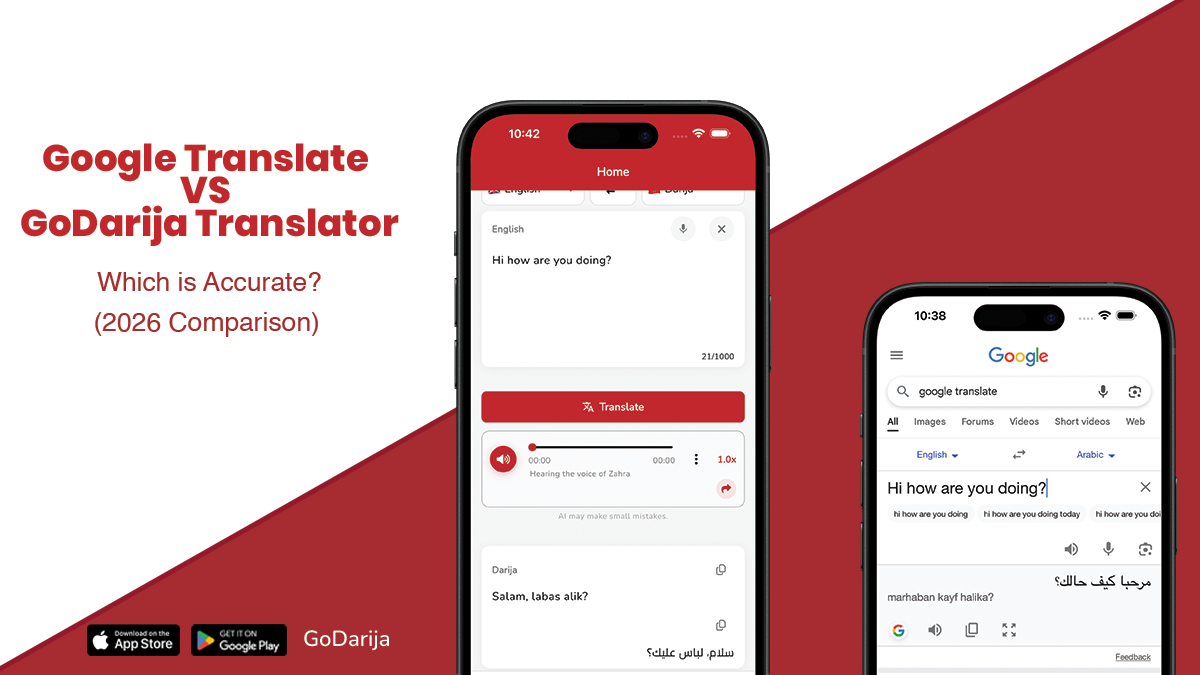
If you are planning a trip to Morocco, trying to decipher a text message from a friend, or connecting with family in the diaspora, your first instinct when faced with a Darija phrase is probably to open Google Translate.
You type in an English phrase, select “Arabic,” and copy the result, expecting to be understood.
However, once you are on the ground in Marrakech or Casablanca, you quickly realize something is wrong. When you use those translated phrases, you get blank stares, polite confusion, or laughter.
The truth is: Google Translate does not effectively support Moroccan Arabic (Darija).
In this article, we will explain the technical and linguistic reasons why Google Translate fails at Darija, provide examples of how it goes wrong, and introduce you to the absolute best workaround to get accurate, native translations in 2026.
01
of 05
The Problem: Google Translate Teaches Modern Standard Arabic, Not Darija
When you select “Arabic” on Google Translate, the system outputs Modern Standard Arabic (MSA), also known as Fusha.
While MSA is the official language of media, government, and formal writing across the Arab world, it is not the everyday spoken language of Morocco.
Moroccan Arabic, known as Darija, is a unique, vibrant dialect. It is a beautiful but complex blend of Arabic roots with significant influences from Amazigh (Berber) languages, French, and Spanish. It has different vocabulary, different pronunciation, and often different grammatical structures than the formal Arabic Google Translate provides.
Why Moroccans Don’t Use Standard Arabic
Most Moroccans understand MSA because they learn it in school and hear it on the news. However, nobody speaks it natively. Using Standard Arabic in a Moroccan market is like walking into a modern coffee shop in London and ordering your drink in Shakespearean English. They will understand you, but it sounds incredibly formal, stiff, and unnatural.
To truly connect with locals, bargain effectively, or understand daily conversations, you must use Darija, not Standard Arabic.
02
of 05
Examples of Google Translate Fails in Morocco
To illustrate how vastly different Standard Arabic (Google’s output) is from real Moroccan Darija, let’s look at common travel phrases.
“What is your name?”
- Google Translate (Standard Arabic): ما اسمك؟ (Ma ismuka?)
- Moroccan Darija: شنو سميتك؟
- Pronunciation: Chnou smitak?
“How are you?”
- Google Translate (Standard Arabic): كيف حالك؟ (Kayfa haluka?)
- Moroccan Darija: لاباس؟ / كيداير؟
- Pronunciation: Labas? / Kidayr?
“I want a coffee.”
- Google Translate (Standard Arabic): أريد قهوة. (Uridu qahwatan.)
- Moroccan Darija: بغيت واحد القهوة
- Pronunciation: Bghit wahd l9ahwa.
“Where is the toilet?”
- Google Translate (Standard Arabic): أين الحمام؟ (Ayna al-hammam?)
- Moroccan Darija: فين كاين بيت لماء؟
- Pronunciation: Fin kayn bit lma?
As you can see, the words are entirely different. If you rely on Google Translate, you won’t just sound formal; you will sound like a textbook, and you might not get the accurate information you need.
03
of 05
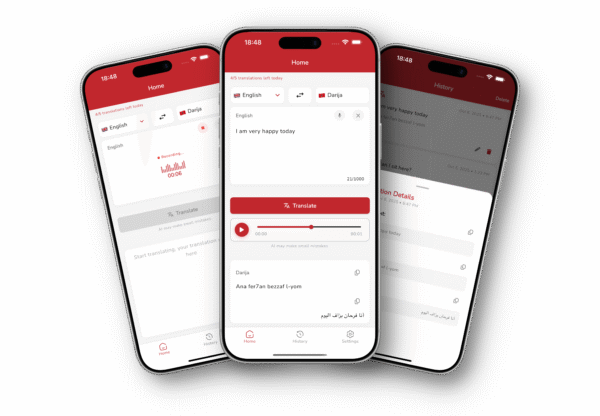
The Best Workaround: The GoDarija Translator App
For years, travelers and learners had no choice but to struggle with generic translators. In 2026, that is no longer necessary.
Why GoDarija Succeeds Where Google Fails:
- Built for Dialect: GoDarija is programmed to understand that Darija is a unique language mix. It focuses on the real-world, spoken language of Morocco, not formal academic text.
- Handles “Arabizi” (Latin Letters): Most Moroccans text using Latin letters and numbers (e.g., using “9” for standard Arabic ‘Qaf’ or “7” for ‘Hha’). Google Translate struggles with this chat alphabet. GoDarija is optimized to recognize and translate “Arabizi” instantly.
- Slang and Nuance: Darija is full of idioms and regional slang. GoDarija handles these nuances, giving you a translation that sounds native, not robotic.
04
of 05
How to Get the Best Results When Translating English to Darija
Whether you are using a dedicated tool like GoDarija or attempting to use generic tools, how you phrase your English input matters significantly. Here are tips to maximize accuracy:
1. Keep Your English Simple
Dialects rely on simple concepts. Avoid complex idioms, sarcasms, or technical jargon in English. Instead of “I am absolutely famished,” try “I am very hungry.”
2. Use Active Voice
Instead of “A coffee is wanted by me,” use “I want a coffee.” Subject-Verb-Object structures are easier to translate accurately into Darija.
3. Check for Dual Meanings
The word “fine” can mean “quality” or “I am okay.” Make sure your English input has one clear meaning.
05
of 05
Conclusion: Use the Right Tool for the Job
While Google Translate is a marvel of modern technology, it is not omnipotent. It is a generalized tool, and specialized languages like Moroccan Darija require a specialized solution.
Using generic Arabic translators in Morocco leads to confusion and artificial interactions. If you want to show respect, build relationships, or simply navigate the country with confidence, invest in the right tool.